Equity by design: The power of inclusion moments
In this webinar, professionally accredited engineer and multi-award-winning DEI consultant Poggy Murray Whitham explores what these insights mean for workplace culture in male-dominated environments shaped by traditional norms and expectations.
What if we monitored inclusion the way we monitor machines?
A Pride in Leadership session with Poggy Murray Whitham, engineer, researcher and founder of Out Engineered
Engineers do not wait for machines to break down. Sensors track pressure, temperature and vibration constantly, flagging problems long before failure. Yet the same organisations that would never run a factory floor on guesswork routinely run their culture on it, waiting for an exit interview or a grievance to tell them something was wrong. Poggy Murray Whitham, a professionally accredited engineer turned DEI researcher and consultant, spent this session asking why that gap exists, and what it would take to close it.
A sector in crisis
Murray Whitham situated the talk in a stark landscape. People working in engineering, construction and manufacturing are nearly four times as likely to die by suicide than the national average. In research they led on masculine workplace culture in engineering, 81% of nearly a thousand respondents reported an emotional or mental health concern, yet only two in five felt comfortable raising it with their employer, a figure that did not move between 2019 and 2022 despite mental health becoming far more visible in public conversation over the same period. Self-harm and suicidal ideation among engineers rose from one in five to one in four across that period.
LGBTQIA+ workers carry a further layer on top of that. Stonewall’s 2018 benchmark found 18% of people had experienced workplace discrimination in the previous year; studies across engineering generally put the figure at around a quarter to a third. Murray Whitham’s own research into LGBTQIA+ experiences in electrical, electronic and automation engineering found it at 72%. Among trans respondents specifically, it was 100%: every person who took part had experienced or witnessed discrimination from a colleague. And the pattern shifted with seniority: junior staff faced more verbal abuse, bullying and recruitment bias, while for those higher up the level of discrimination did not fall, it simply became harder to see, shifting towards blackmail and progression bias.
From scheduled maintenance to condition monitoring
The engineering concept Murray Whitham kept returning to was the shift from scheduled to predictive maintenance. Traditionally, machines are inspected and parts replaced at fixed intervals whether or not anything is wrong, in the same way a car gets serviced every twelve months regardless of how it is running. Modern engineering has largely moved past this, embedding systems with sensors that catch early warning signs and allow intervention before a breakdown, a shift also visible in healthcare’s move from paper charts to real-time digital patient observation.
Most organisations’ approach to inclusion, Murray Whitham argued, is still stuck at the scheduled maintenance stage: an annual engagement survey, a one-to-one that goes nowhere, broad questions asked and hoped over. By the time a problem surfaces, people have often already disengaged, burnt out or left. “Inclusion shouldn’t be improvised, it should be engineered,” they said. The alternative is treating psychological safety, workload equity, career progression and cultural climate as things to track continuously, the way pressure or vibration is tracked on a machine, rather than as an annual box-ticking exercise.
Small moments, real weight
Much of the session drew on Murray Whitham’s book, Inclusion Moments, which began as LinkedIn posts before becoming a bestseller. One told of being served differently to the customer ahead of them in a small-town shop queue, goods held back until payment was taken first. Rather than assume malice, Murray Whitham engaged warmly with the shopkeeper anyway; a year later, revisiting the same shop, they were treated the same as everyone else. The point was not the individual incident but what it revealed: “What small signals does your workplace send about trust, about belonging or about risk, and where might everyday behaviours be reinforcing or challenging bias without anybody specifically naming it?”
A second theme was the burden of representation, the exhaustion of repeatedly being the only Black, queer, disabled or autistic person in the room, expected to speak for an entire community on top of doing the actual job. Murray Whitham called this a single point of failure: when inclusion work rests on one person or one network, all of that knowledge disappears the moment they burn out or leave. Their view was direct: this labour should be recognised as work, formally valued and compensated, not squeezed into lunch breaks and evenings on top of a full-time role.
A third moment, prompted by the aftermath of being nominated for a National Diversity Award and then targeted with death threats and racist, homophobic abuse online, was a neighbour handing over a found 50p coin stamped “Diversity Built Britain.” A small, almost throwaway gesture that, in that particular week, said something much larger: “you belong, we’re thinking about you.” Murray Whitham’s summary: “You don’t have to change the world to be an ally.”
What organisations get wrong
Several attendees pushed the conversation further. Liz, drawing on a nursing background, asked how people are actually persuaded to speak up rather than just recognising a problem exists. Murray Whitham’s answer was that senior management cannot simply declare a workplace psychologically safe; that judgement belongs to employees. What leaders can do is model the behaviour they want to see, including admitting uncertainty rather than performing constant competence, and build mechanisms like anonymous reporting that lower the cost of speaking out. Bryony added that strong internal networks can absorb enormous amounts of support work, but the job of carrying that message up to leadership still tends to fall on the same small group of people.
Rosie, a clinical psychologist who had been formally tasked with building psychological safety in her own workplace, offered a harder counterpoint: she described being told to “suck it up” and marked down in an appraisal after raising concerns about a toxic culture, having experienced sustained bullying herself. Psychological safety, she said, is not about making people comfortable, it is about being able to say something was not okay and be heard rather than punished for it. Murray Whitham responded with a statistic they use to jolt audiences out of treating this as soft: one in five people who maintain aircraft report needing immediate mental health support. Few people would still board that plane if told so at the gate, yet organisations routinely accept the equivalent risk in how they treat the people running their systems.
Poggy Murray Whitham is a professionally accredited engineer, DEI researcher and founder of Out Engineered, and author of the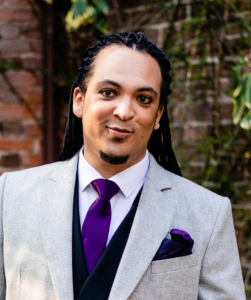 bestselling Inclusion Moments. They also serve as chief operating officer of a UK DEI survey and analytics platform, and hold advisory roles with the Royal Academy of Engineering, the LGBT Foundation and InterEngineering, which they co-chair.