Unapologetic: The Strength and Leadership of Lesbians
Bringing together Amanda Collier (The Traitors & former Senior Detective at The Met), Jax Effiong (EDI Lead at GM Fire and Rescue) & Laura Wilkinson (Managing Director at LGBT Foundation) for Lesbian Visibility Week.
Unapologetic: how lesbians fuel change, transform the status quo, and model courageous leadership
A Pride in Leadership and LGBT Foundation panel discussion for Lesbian Visibility Week, April 2026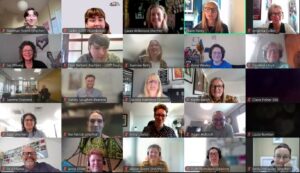
Lesbian Visibility Week is a time to celebrate, but it is also a time to ask difficult questions. Why, in 2026, are lesbians still so often invisible in data, media, funding and leadership? Research from Diva magazine suggests that 68% of lesbians have experienced discrimination in business environments, and figures from Out Britain indicate that only around 16% of LGBTQ+ entrepreneurs are lesbians. Even within the community, lesbians remain under-represented.
To mark the week, Pride in Leadership and LGBT Foundation brought together three inspiring lesbian leaders for a conversation about identity, resilience and the kind of leadership that comes from lived experience. The panel featured Amanda Collier, former Detective Chief Inspector with the Metropolitan Police and star of BBC’s The Traitors; Jax Effiong, Diversity and Inclusion Manager for the Greater Manchester Combined Authority and Greater Manchester Fire and Rescue Service, and Chair of the Board of Trustees at LGBT Foundation; and Laura Wilkinson, Managing Director of LGBT Foundation. The event was hosted by Claire Ebrey, Co-Founder of Pride in Leadership. What followed was a candid, moving and energising discussion.
Why the L comes first
Claire opened the session by reminding the audience that the L sits at the front of LGBTQ+ because of the role lesbians played during the AIDS crisis, stepping forward as caregivers when others would not. Yet despite that legacy, lesbians continue to face erasure. Claire urged attendees to use the event as a launchpad for action: “Let’s support each other. Let’s say each other’s names in the rooms that we’re not in.”
Lived experience as a leadership foundation
Each panellist traced their leadership journey back to formative, and often painful, experiences of growing up as a lesbian.
Jax spoke about what it meant to come of age as a lesbian woman of colour in 1980s Manchester, navigating the hostility of Section 28 and the hate directed at LGBTQ+ people during the AIDS pandemic. “That threat for me is absolutely compounded if you’re part of our queer community and a person of colour,” she said. She described how the negative experiences of her youth built the resilience that underpins her leadership today: “You get upset, but then you get angry. And I think when that then builds into resilience, it’s fantastic.”
Laura recalled being “literally the only gay in the village” growing up under Section 28, and ringing the LGBT Foundation helpline at 15 with the support of her mum – a full-circle moment, given that she now leads the organisation. She also spoke about going back into the closet while working in rural South Australia for her own safety, an experience that fuelled her commitment to creating psychologically safe workplaces.
Amanda talked about nearly leaving the Metropolitan Police after four years because of the homophobic abuse she received from a small but damaging minority. A turning point came when someone took her under their wing and she began to flourish. “I couldn’t understand why I’d got these jobs,” she recalled. “People kept saying to me, ‘It’s because you’re good. It’s because you’re good at what you do.'”
The superpower of emotional intelligence
When asked what strengths their experiences as lesbians had given them, the panellists were united on one thing: emotional intelligence. Amanda put it plainly: “I feel that I am far more emotionally intelligent because I’ve had those extremes. And until you’ve had those extremes, you don’t know what it feels like.” She described how that awareness shaped her leadership in practice, offering her team multiple ways to communicate and contribute because she understood that “we’re not all built the same.”
Jax described a “heightened sense of empathy and adaptability” that comes from having to navigate hostile environments from a young age. She spoke about how that empathy translates into the courage to challenge norms and inspire others: “You can frequently translate that into courage, stepping up. It’s a willingness to challenge the norms and inspiring others to speak up, especially to speak truth to power.”
Laura echoed both panellists, noting how their answers all linked back to “that sense of community and the ability to create interpersonal relationships.”
Being visible, being unapologetic
The event was titled “Unapologetic,” and the conversation returned again and again to what it means to show up authentically, and the risks and rewards of doing so.
Laura shared a story about starting a new job and putting her pronouns in her email signature on day one, only for the CEO to tell her it was not in the brand guidelines. She refused to remove them, and after months of difficult conversations, was allowed to run a session on pronoun use. Two staff members subsequently came out as non-binary, with one directly citing that training as the reason they felt safe. “Being unapologetic for me means following your values and leaning into that discomfort when you can and when it’s safe to do so,” Laura said, “because these small gestures can really have such a big impact.”
Jax spoke about the careful calculation that visibility requires: “Visibility is a conscious choice that can have positive and negative effects. So risk assessing the environment is so important. We need to push but be aware when to push.” She was honest about the toll it can take, describing how she has experienced the edges of burnout and learned to pace herself. Her advice: find your allies, find your tribe, set boundaries, and look after yourself.
Amanda brought a different kind of visibility story, one that unfolded on national television. When she casually came out as a lesbian on The Traitors, she had no idea of the impact it would have. “I did not anticipate the amount of people that DM’d me on social media saying, ‘You don’t know what you’ve done,'” she said. Young people, in particular, reached out to say her words had made a difference. She described being approached regularly in public by people wanting to thank her, and has since been invited by the England Rugby Association to speak about the experience and its wider significance.
Leading in spaces not designed for you
Both Amanda and Jax reflected on what it means to lead in male-dominated environments. Amanda described being one of two women in a hangar of a thousand people during a counter-terrorism training exercise with special forces, and her boss warning her: “If you say something, make it good, because everybody is watching you.” She spoke about the pressure of being held to a higher standard, but also how it made her better under pressure in everyday situations.
Jax recognised the same dynamic: “That constant awareness of having to prove our credibility and our value.” She also spoke about the importance of building a broader coalition of voices rather than being the lone person pushing for change. “I’ve actually been told, ‘Oh, it’s Jax again.’ And actually we need to make sure we build our tribe. There’s strength in numbers.”
Where lesbians are still overlooked
Laura highlighted the scarcity of content on lesbian leadership, noting how little she found when preparing for the event. She pointed to the axing of the BBC’s I Kissed a Girl, the first lesbian dating show to air at prime time, and the fact that in 2023 there were only three permanent lesbian bars in the entire UK. She also raised the serious issue of healthcare: a friend of hers was told she did not need a smear test because she was a lesbian. “That’s why we talk about the need to champion sexual orientation monitoring in the NHS,” Laura said. “We’re currently not counted, currently not monitored.”
Jax added an important point about menopause, and the lack of spaces where women living together can talk openly about going through it at the same time. “You’ve got someone you can lean into and go, it’s not just me with brain fog,” she said, calling for more positive stories about the realities of LGBTQ+ family life.
Progress and the road ahead
When asked whether further progress was possible despite the current political climate, the panel was cautiously optimistic. Laura acknowledged that “it does feel like some of our rights are being stripped away,” and emphasised the importance of standing alongside trans siblings whose rights are under particular threat. But her core message was hopeful: “We’ve got more in common and we’re stronger when we’re together.”
Jax drew on history, recalling the collective fight against Section 28 and seeing young people today building the same kind of solidarity. “That’s what we do. We join together in the face of adversity.”
Key takeaways for LGBT+ leaders and aspiring leaders
Your lived experience is a leadership asset. The resilience, empathy and emotional intelligence that come from navigating the world as an LGBTQ+ person are genuine strengths. As Amanda said: “You’ve got another layer to you of emotional intelligence that I don’t think other people have.”
Visibility is a radical act, but it requires safety. Being visible can open doors for others in ways you may never fully see. Laura’s pride lanyard led young people to approach her for advice. Amanda’s moment on television impacted queer women who watched. But visibility must be a conscious, informed choice. As Jax advised: “Risk assessing the environment is so important. We need to push but be aware when to push.”
Be unapologetic about your values. Standing firm on what matters, whether that is pronoun use in email signatures or challenging workplace norms, can create ripple effects far beyond what you expect. But being unapologetic does not mean being reckless. It means leaning into discomfort when you can, and when it is safe to do so.
Find your tribe and build your coalition. No one should have to drive change alone. Find allies, build networks, and bring others along. As Jax put it: “We need to make sure we build our tribe. There’s strength in numbers.”
Don’t wait for perfection. Jax’s reminder that “perfect gets in the way of being good” is a message every leader needs to hear. Show up, be visible, and learn as you go.
Open doors for others. Use your position, however senior or junior, to lift others. Say people’s names in the rooms they are not in Claire said. Be the role model your younger self needed. As Laura reflected: “How can I be that role model that my younger self would have wanted to meet?”
Protect your energy. Challenging systems is important, but it is also exhausting. Set boundaries, practise self-care, and do not spend your energy on people who are determined to undermine you. As Jax said: “Don’t waste your time and energy on the saboteurs. Spend it on those people who are curious, who actually have the potential to be your allies.”
Remember: you are enough. Jax’s closing message is one worth holding on to. “As lesbians, as non-binary people, as allies, we are enough.”
Speaker biographies
Amanda Collier
Amanda is a former Detective Chief Inspector with the Metropolitan Police Service, with nearly three decades of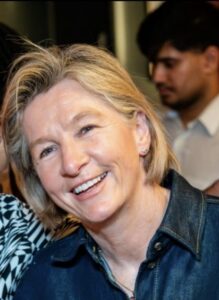 experience including major crime and counter terrorism policing.
Beginning her career at Islington Police Station in North London, she quickly qualified as a Detective and went on to work on murder investigations across the capital. She was later promoted to Detective Sergeant and spent several years leading investigative teams across North London before moving to Counter Terrorism Command at New Scotland Yard.
During her counter terrorism career she was involved in a number of high-profile and internationally significant investigations, including the attempted murder of MP Stephen Timms by Roshonara Choudhry, the murder of Lee Rigby by terrorists Michael Adebolajo and Michael Adebowale, and the attempted airline bombing by Umar Farouk Abdulmutallab. As part of the latter investigation, she travelled to Nigeria representing UK Counter Terrorism and worked alongside United States intelligence partners to progress the international inquiry.
She also served as a forensic coordinator before becoming the National Coordinator for HM Special Forces operations, working with the UK’s elite units including the SAS and SBS. She later progressed to Detective Inspector at the National Counter Terrorism Coordination Centre, collaborating closely with UK intelligence agencies on national security operations.
Promoted to Detective Chief Inspector, she became Business Change Lead responsible for helping to establish the Counter Terrorism Operations Centre in West London, a major programme designed to enhance national collaboration across counter terrorism policing. Her final role before retiring from the Metropolitan Police Service in 2020 was within the Metropolitan Police Intelligence Hub, where she coordinated several hundred staff supporting intelligence across London policing.
Since retiring, she has focused on travel, charitable work and maintaining a strong commitment to health and wellbeing. In 2025 she appeared on the BBC reality series The Traitors (Season 4), following an extensive and highly competitive selection process.
During the programme’s medical screening she was unexpectedly diagnosed with a serious genetic heart condition, a discovery that has profoundly shaped her outlook. She is now passionate about raising awareness of genetic heart disease and hopes to work with organisations such as the British Heart Foundation to encourage early testing and prevention.
Drawing on her experience in counter terrorism, leadership under pressure, and personal resilience, she speaks about decision-making in high-stakes environments, leadership in male-dominated professions, and the importance of health awareness and life beyond policing.
Jax Effiong
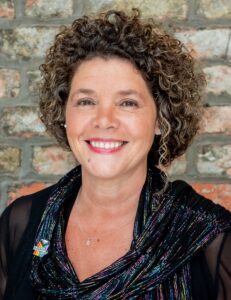
GMCA/GMFRS Diversity and Inclusion Manager, and Chair of the Board of Trustees at LGBT Foundation.
Jax started her career path as a 14-year-old volunteer 46 years ago! (DJ-ing in her local youth club) this led to a professional Career in Youth Work and Community from supporting young people leaving care and living independently, to developing Learning programmes that enabled many young people to recognise their strengths and capabilities as they navigated adulthood.
Jax spent many years utilising urban outdoor adventure as a Canoeing / Climbing coach with families and young people on the margins of our communities. Setting up the first Black and Asian girls and women’s water activity workshops at her centre, supporting Girls’ & Young Women’s spaces, 50 plus spaces and disability spaces with a focus on young men’s needs through time away from housing estates to rural spaces.
Jax is committed to incorporating intersectional approaches in her work, that includes safe and honest conversations around identity. Being her authentic self, enabling self-care, strength, visibility, role modelling and inclusive leadership behaviour, ensuring platforms are shared and accessible to others.
Jax joined the fire service in 2011 as a Community Safety Manager, and I’m one of the co-founders of the most recent LGBTQ+ staff network, established in 2016. I Supported the development of other staff networks across the organisation. Ensuring joint events each year inclusive of LGBTQ+ History Month, Black History Month, and many more key events throughout the year, driving inclusive change for underrepresented and marginalised groups in the workplace, with a focus on Race, Gender, LGBTQIA+ and Disability equity.
Jax now manages a range of Staff Networks, Forums and platforms in the workplace, she is a Coach, Mentor, Designated safeguarding officer and lead for national benchmarking programmes that includes working in partnership with Stonewall UK. (Ranked 34th and 1st Emergency Service 2024). Race Equality Matters UK (Trailblazer Bronze award 2024 -2026), White Ribbon UK, Disability Confident Scheme (Employer), and Centre for better Ageing UK.
Jax’s role is to advance equality and equity in the workplace and help demonstrate inclusive cultural improvements year on year. Ensuring staff learning and employee voice is valued. Influencing leaders and the workforce through inclusive insights and celebrating diversity at every opportunity, shaping a real sense of belonging.
Jax is her authentic self, a Lesbian woman of colour, her beliefs and values are at the heart of what she brings to work, volunteering, and part of her every day.
Recent accolades include Excellence in Fire Awards – Most Influential LGBTQ+ Individual in Fire 2023 and Stonewall UK Changemaker of the Year 2024.
Laura Wilkinson
Laura Wilkinson (she/her) is the Managing Director of LGBT Foundation, the UK’s largest health and wellbeing charity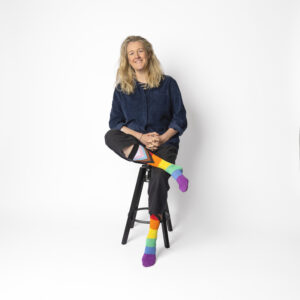 for LGBTQIA+ people. She leads the organisation’s national operations, strategy and teams, ensuring that services remain community-led, responsive and genuinely life-changing. Each year, LGBT Foundation supports more than 55,000 people across the UK.
Laura’s connection to the organisation is deeply personal. At the age of 15, she and her mother called the LGBT Foundation Helpline during a vulnerable period in her life. That experience of being supported and heard continues to shape her values and leadership approach today.
Her career has consistently centred on community power and the belief that leadership should create space for others to thrive. Prior to joining LGBT Foundation, Laura led a social integration charity focused on reducing isolation by connecting older and younger neighbours. Earlier in her career, she managed youth programmes, ran language schools and taught English abroad. Being openly lesbian in these roles enabled colleagues and young people to see themselves reflected in leadership, something she had longed for growing up.
Laura’s journey has not been linear. While working in regional Australia in her mid-20s, she returned to the closet for safety reasons. This experience strengthened her commitment to building workplaces where no one feels compelled to hide their identity.
She is passionate about visibility as a force for protection, empowerment and transformation, and is dedicated to championing inclusive workplaces and ensuring underrepresented LGBTQIA+ communities have access to support, representation and power.